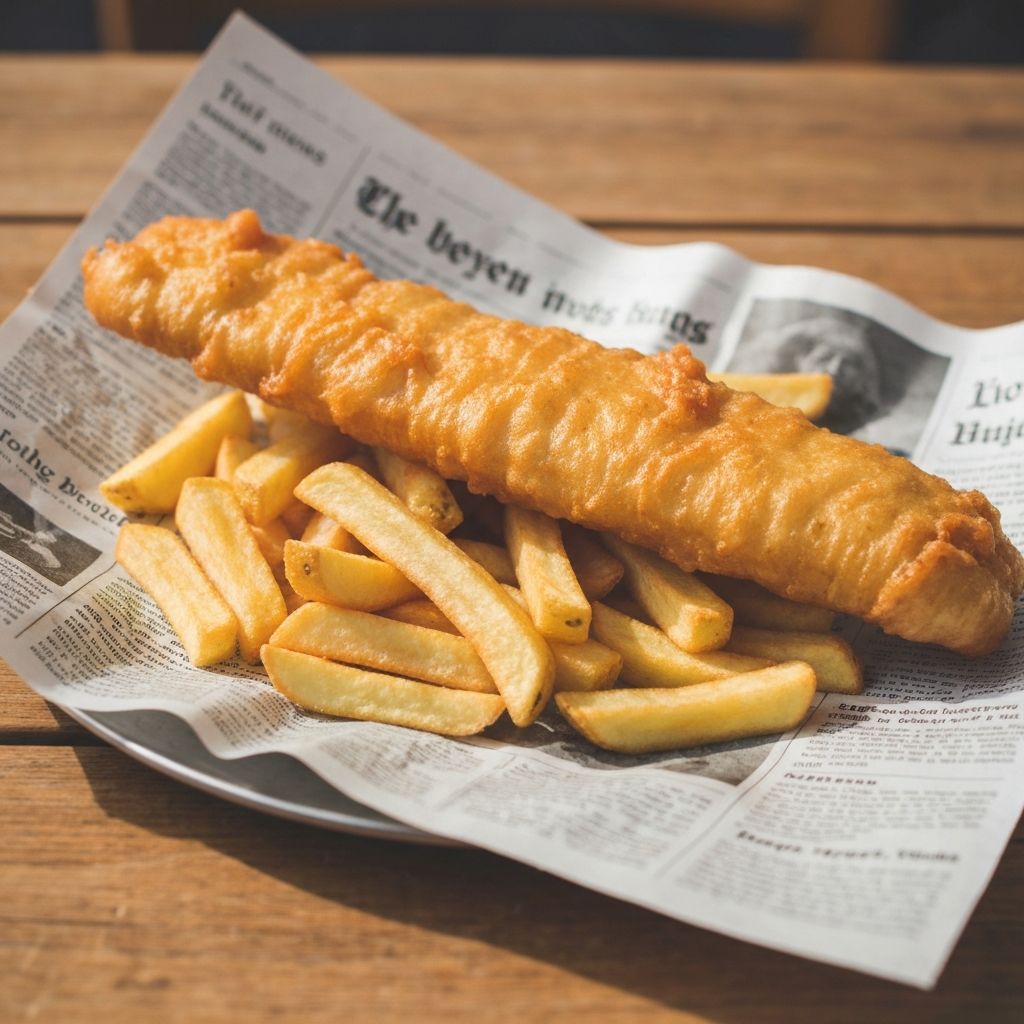
Fish & Chips: Energy Density and Macronutrient Profile
Fish and chips represents a distinctive component of British culinary culture and food traditions. Understanding its nutritional composition—particularly the energy density and impact of preparation method—provides detailed insight into food structure without prescriptive interpretation.
Component Energy Density Analysis
Fish and chips comprises two primary components whose nutritional profiles differ substantially:
| Component | Per 100g (kcal) | Typical Portion (g) | Portion (kcal) | Protein (g/100g) | Fat (g/100g) | Carbs (g/100g) |
|---|---|---|---|---|---|---|
| Battered Fish (fried) | 218 | 150 | 327 | 15 | 11 | 9 |
| Fish (grilled, no batter) | 148 | 150 | 222 | 22 | 4.5 | 0 |
| Chips (deep fried) | 312 | 150 | 468 | 3 | 17 | 41 |
| Chips (oven baked) | 149 | 150 | 224 | 2.7 | 1.2 | 31 |
| Mushy Peas (cooked) | 88 | 100 | 88 | 6.9 | 0.7 | 12 |
| Tartare Sauce | 296 | 30 | 89 | 0.5 | 30 | 1 |
| Malt Vinegar | 18 | 10 | 1.8 | 0 | 0 | 0 |
Complete Meal Composition
A typical fish and chips meal composition is as follows:
- Battered fried fish & fried chips meal: Approximately 850–950 kcal total
- Fish (grilled) & fried chips meal: Approximately 720–800 kcal total
- Battered fish & baked chips meal: Approximately 580–650 kcal total
- Protein content: 20–25g across variations
- Fat content: 25–50g depending on preparation method
- Carbohydrate content: 65–85g primarily from potatoes
Impact of Preparation Method on Energy Density
The preparation technique substantially affects the energy density of fish and chips. This represents factual compositional difference based on fat absorption during cooking:
Fish Batter Impact
Unbattered fish (fried): 180–190 kcal/100g
With batter coating: 218 kcal/100g
Difference: Approximately 30–40 kcal per portion due to fat absorption in breading.
Potato Preparation Difference
Deep fried chips: 312 kcal/100g
Oven baked: 149 kcal/100g
Difference: Approximately 163 kcal/100g difference results from oil absorption during frying vs minor oil spray in baking.
Accompaniment Effect
Fish with vinegar only: Base composition
Fish with tartare sauce: Additional 80–90 kcal per serving
Addition: High fat content in typical tartare sauce approximately 30g/100g.
Fish Type Variation
Cod (typical): 82 kcal/100g raw
Haddock: 73 kcal/100g raw
After battering & frying: 210–220 kcal/100g for both
Macronutrient Composition Analysis
The macronutrient distribution reflects ingredient composition and preparation technique:
| Preparation | Protein % | Fat % | Carbs % | Total kcal |
|---|---|---|---|---|
| Traditional (fried both) | 10% | 55% | 35% | 920 |
| Grilled fish + fried chips | 13% | 45% | 42% | 760 |
| Battered fish + baked chips | 15% | 38% | 47% | 620 |
| Grilled fish + baked chips | 19% | 12% | 69% | 450 |
Micronutrient Considerations
Fish and chips provides notable micronutrient contributions despite varying energy density:
- Fish component (iodine, selenium, vitamin D): Particularly present in white fish varieties (cod, haddock, pollock)
- Potato component (potassium, vitamin B6, manganese): Present in significant quantities when skin is retained
- Mushy peas (fibre, iron, folate): When included as accompaniment, contributes 5–7g fibre and 2–3mg iron per 100g
- Fat-soluble vitamins: May be enhanced or reduced depending on oil type used in frying
Historical and Cultural Context
Fish and chips holds cultural significance in British food tradition dating to the 19th century. Contemporary preparations range from traditional fish and chip shop offerings to health-conscious modifications. This article presents compositional data without cultural interpretation or dietary recommendation.