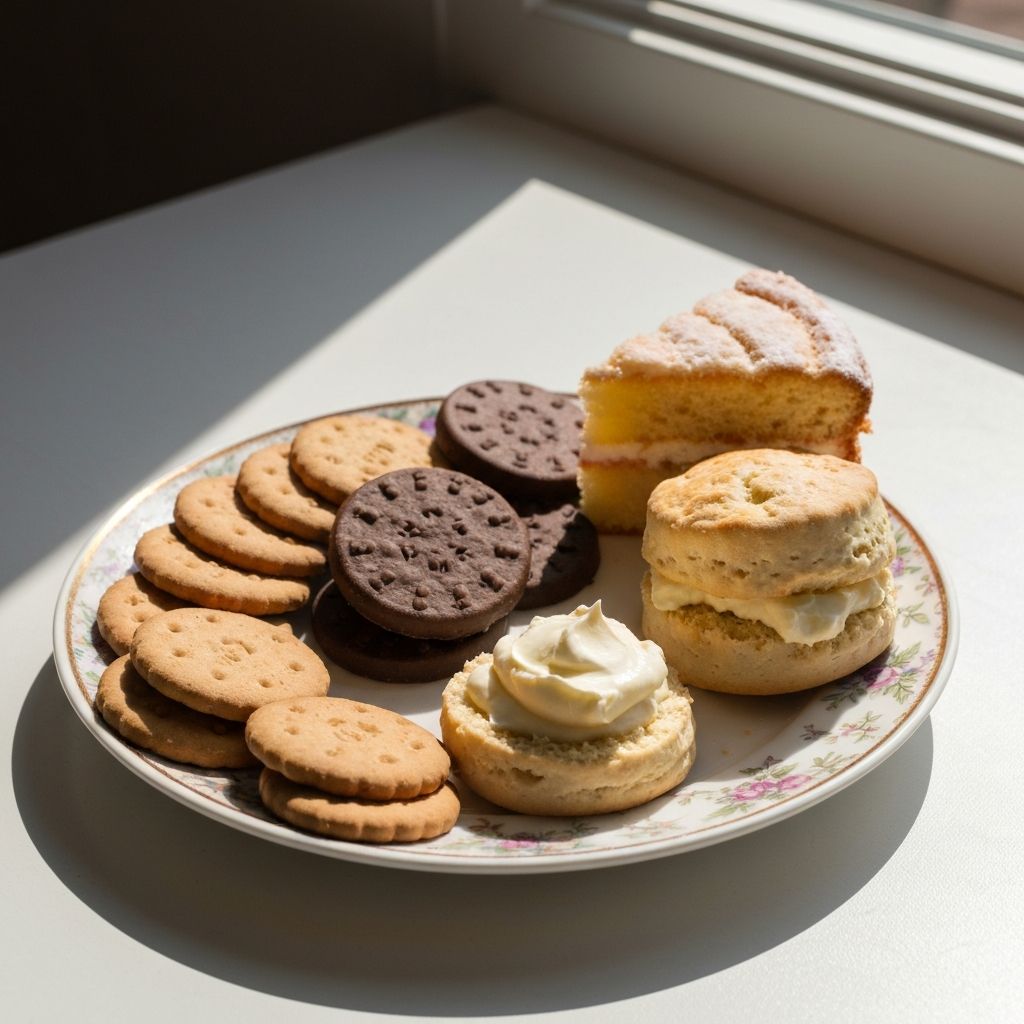
Biscuits, Cakes and Sweet Snacks Comparison
British biscuits, cakes and sweet snacks represent traditional tea-time accompaniments in UK culinary culture. Understanding the compositional variety of everyday tea-time foods provides detailed insight into food structure and ingredient impact on energy density.
Biscuit Type Composition Analysis
The following table presents composition data for common British biscuit varieties:
| Item | Per 100g (kcal) | Single Item (g) | Single Item (kcal) | Protein (g) | Fat (g) | Fibre (g) |
|---|---|---|---|---|---|---|
| Digestive Biscuit | 471 | 30 | 141 | 7 | 21 | 2 |
| Chocolate Digestive | 493 | 33 | 163 | 6 | 24 | 1.5 |
| Hobnob (oat) | 478 | 32 | 153 | 8 | 22 | 2.5 |
| Rich Tea Biscuit | 435 | 28 | 122 | 6 | 14 | 1 |
| Custard Cream | 489 | 30 | 147 | 5 | 23 | 1 |
| Shortbread | 498 | 28 | 139 | 5 | 32 | 0.8 |
| Ginger Nut | 456 | 20 | 91 | 6 | 15 | 1.2 |
| Homemade Oat Biscuit | 420 | 30 | 126 | 8 | 17 | 3 |
Cake Composition Analysis
Common British cake varieties and their composition:
Victoria Sponge
Per 100g: 345 kcal
Typical slice (80g): 276 kcal
Protein: 4g/100g
Fat: 17g, Sugar: 26g per 100g
Carrot Cake (homemade)
Per 100g: 312 kcal
Typical slice (80g): 250 kcal
Protein: 4.5g/100g
Fat: 14g, Fibre: 2g per 100g
Lemon Drizzle Cake
Per 100g: 338 kcal
Typical slice (80g): 270 kcal
Protein: 3.5g/100g
Fat: 16g, Sugar: 28g per 100g
Chocolate Cake
Per 100g: 378 kcal
Typical slice (80g): 302 kcal
Protein: 4.5g/100g
Fat: 20g, Sugar: 30g per 100g
Sweet Snacks and Confectionery
Energy density of common sweet snack items consumed with tea:
- Scone (plain): 330 kcal/100g, protein 7g, fat 15g
- Scone (with cream and jam): Complete serving approximately 350–400 kcal
- Crumpet (plain): 202 kcal/100g, carbs 43g, fibre 0.6g
- Crumpet (buttered): Per crumpet (80g) approximately 200–220 kcal
- Rock cake: 352 kcal/100g, fat 14g, sugar 22g
- Flapjack: 456 kcal/100g, fat 20g, oats composition
- Brownie (dense chocolate): 412 kcal/100g, fat 22g, protein 4.5g
- Muffin (blueberry): 355 kcal/100g, fat 12g, sugar 24g
Ingredient Impact on Biscuit and Cake Composition
Specific ingredients substantially affect final composition:
| Component | kcal/100g | Impact on Product |
|---|---|---|
| Butter (main fat) | 717 | Increases energy density by 6–8 kcal per 1% increase |
| Oats | 389 | Adds fibre 8–10g/100g oats, moderate energy increase |
| Chocolate (dark) | 585 | Increases energy density, adds 7–12% to product depending on quantity |
| Sugar | 387 | Increases energy density by 4 kcal per 1% by weight |
| Flour (white) | 364 | Base carbohydrate, adds fibre if whole wheat (8.7g/100g) |
Portion Size Considerations
Understanding typical serving sizes provides context for compositional data:
- Single biscuit serving: 20–35g depending on type (typically 1 biscuit = 90–160 kcal)
- Cake slice: 70–100g typical (typically 240–400 kcal depending on type)
- Tea-time plate: Biscuit (30g) + small cake slice (60g) + tea = approximately 250–350 kcal
- Two biscuits with tea: Approximately 280–320 kcal
Preparation Method Variation
Homemade vs commercial biscuit and cake preparation affects composition:
- Commercial biscuits: Often contain added emulsifiers and preservatives, standardized composition
- Homemade biscuits: Composition varies based on specific recipe and butter/sugar ratios (typically 420–500 kcal/100g)
- Lower-fat biscuit variants: Approximately 380–430 kcal/100g, higher in refined carbohydrates to maintain texture
- Wholemeal variants: Add fibre 2–4g/100g compared to white flour versions, similar or slightly lower energy density